
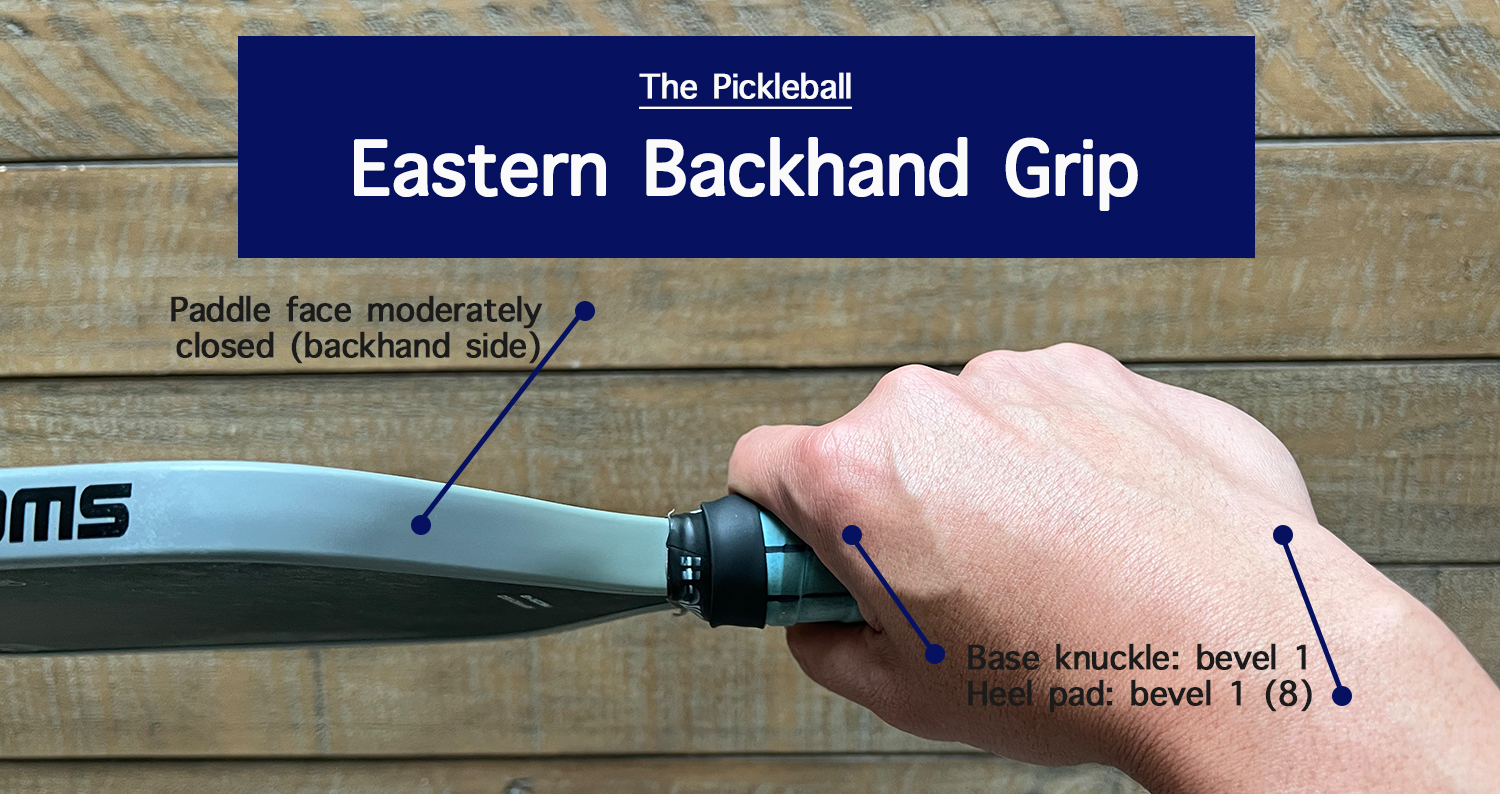
The standard Continental grip is often called the “universal grip” in pickleball because it handles both sides of the court without a mid-rally adjustment. However, players looking to unlock an aggressive, weaponized backhand require a specialized alternative: the Eastern Backhand grip.
While common forehand grips (like the Eastern Forehand, Semi-Western, and Western) rotate in a clockwise direction to close the paddle face, the Eastern Backhand grip flips the script entirely. It rotates the opposite way, placing your hand in the ultimate power position to drive through backhand groundstrokes with heavy topspin.
Here is a complete guide to finding the Eastern Backhand grip, the biomechanics that make it work, and how to deploy it effectively without hurting your net game.
What Exactly Is the Eastern Backhand Grip?
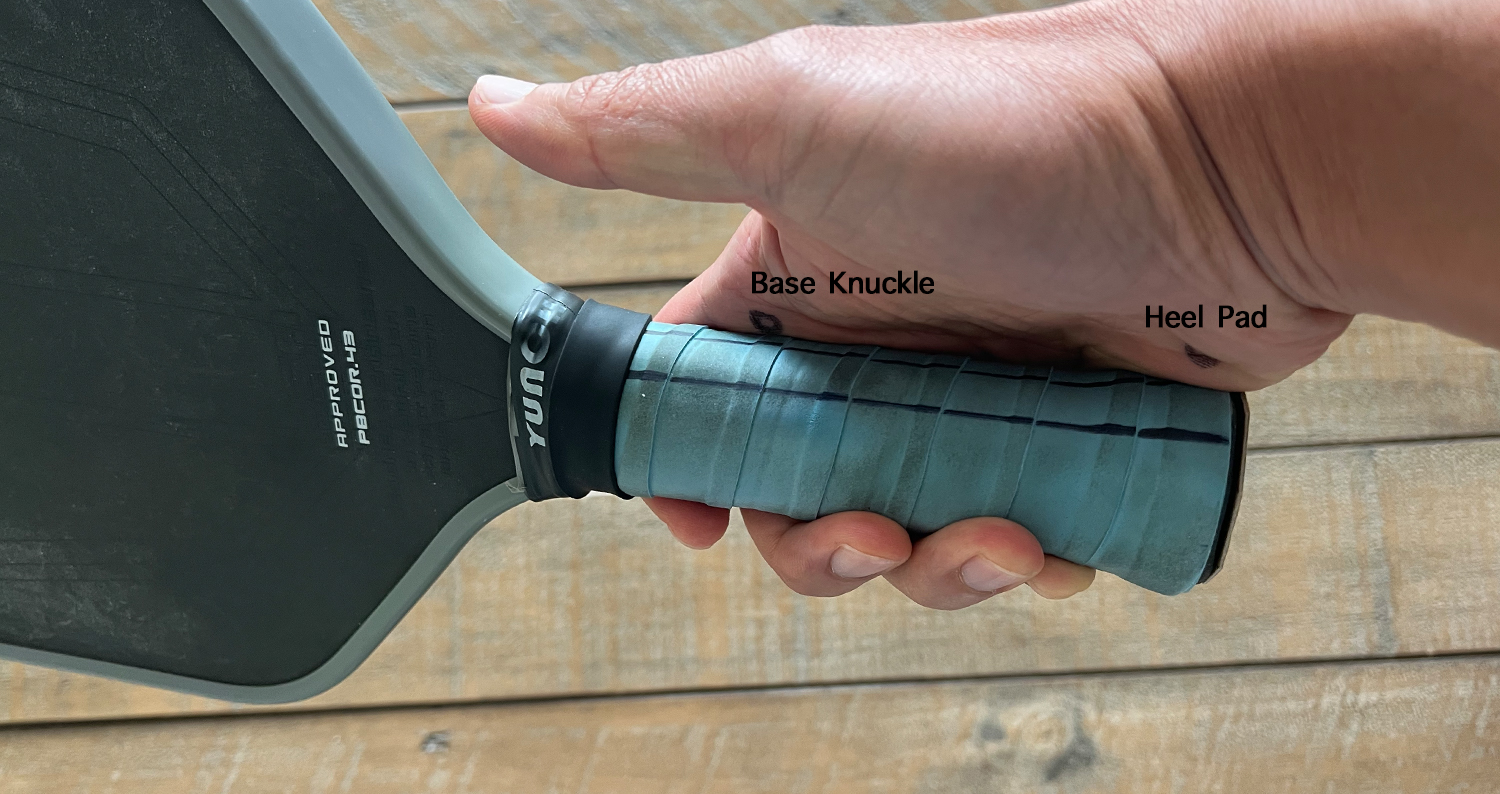
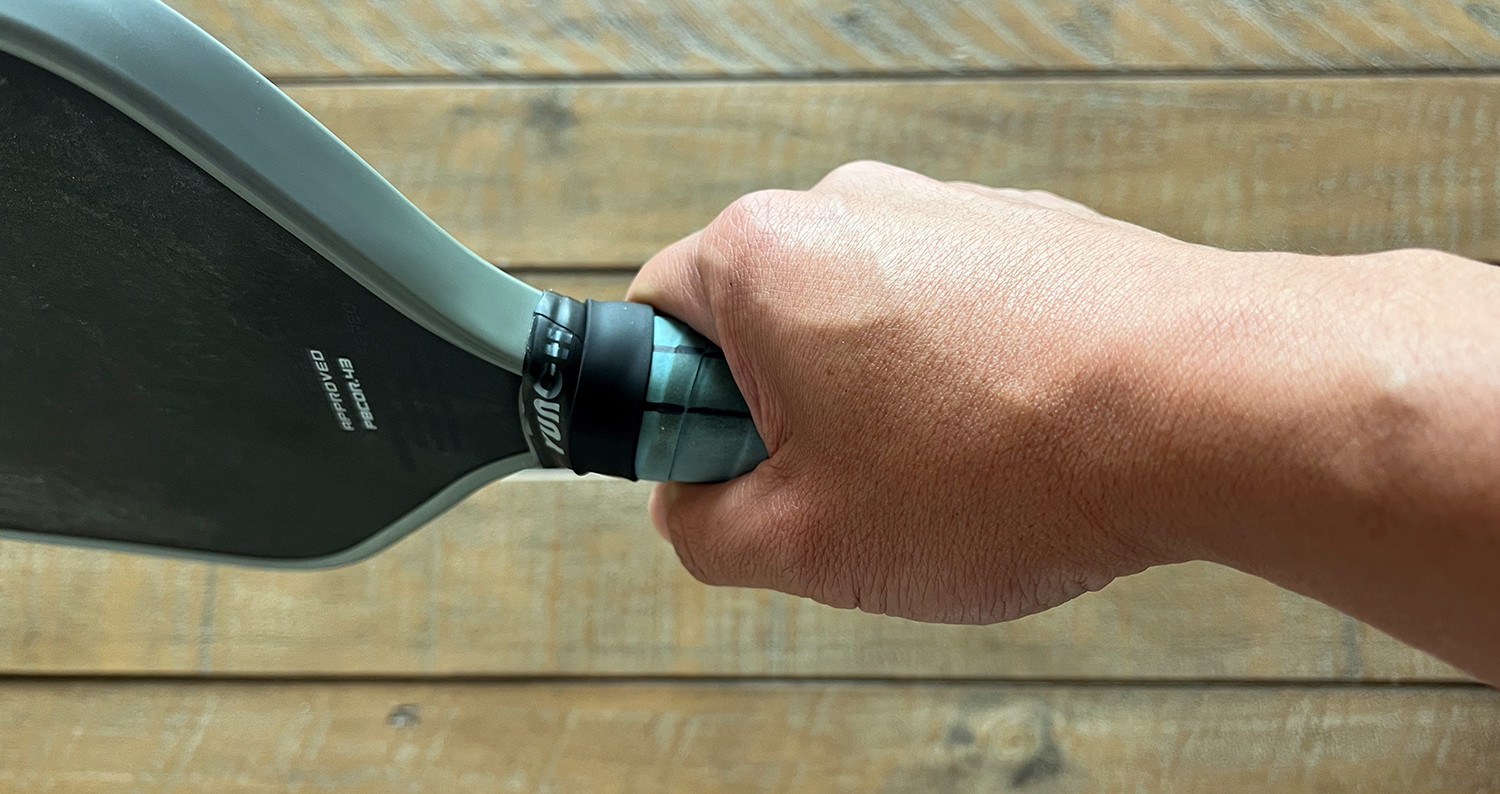
The Eastern Backhand grip is a specialist position where your hand rotates counter-clockwise (for right-handers) from the Continental position, landing your index knuckle and the heel of your palm squarely on Bevel 1 (the flat top surface of the handle).
By shifting your hand to the top of the paddle, you place the structural skeleton of your wrist and forearm directly behind the handle. This offers immense stability against the force of the ball, allowing you to hit clean, driving one-handed backhands without the paddle twisting in your hand.
⚠️ The Two-Handed Exception: This grip is fundamentally a one-handed specialist grip. It is not the standard dominant-hand position for a two-handed backhand. For a two-hander, coaching consensus dictates keeping your dominant hand in Continental while your non-dominant hand sits above it in an Eastern Forehand position.
Quick Summary
-
The Alignment: Index knuckle and palm heel rest on Bevel 1 (the flat top surface of the handle).
-
Primary Use Case: A dedicated, single-purpose grip for executing aggressive one-handed baseline drives and rolling backhand passing shots.
-
Two-Handed Setup: Keep the dominant (bottom) hand in Continental; place the non-dominant (top) hand in an Eastern Forehand position.
-
The Golden Rule: You must switch out of this grip immediately when transitioning to the kitchen line or defending forehand shots.
How to Find the Eastern Backhand Grip: Step-by-Step
To find this position accurately, look straight down at your paddle handle as if it were an octagon with eight distinct sides (bevels). Bevel 1 is the flat surface facing straight up at the sky.
1. Establish Your Baseline (Continental)
Start by placing your hand in the Continental grip. Your index finger’s base knuckle and the heel of your palm should rest on Bevel 2 (the slant to the right of the top flat surface for right-handers).
2. Rotate Counter-Clockwise
Rotate your hand counter-clockwise one full bevel to the left. Your index knuckle and palm heel should now sit flat on Bevel 1.
-
Note for Left-Handed Players: You will perform this step by rotating your hand clockwise from Bevel 8 onto Bevel 1.
3. Check the “V” Realignment
Look down at the “V” shape formed by your thumb and index finger. It should point distinctly toward your left shoulder (your backhand side).
4. Adjusting for a Two-Handed Backhand
If you are hitting a two-handed drive, do not use the Eastern Backhand grip with your bottom hand. Leave your dominant hand on the bottom in Continental. Wrap your non-dominant hand directly above it, aligning its index knuckle into an Eastern Forehand position (Bevel 7 for a right-handed player’s left hand).
The Biomechanics: Why Stillness Matters Here
Most forehand modifications alter the wrist’s flexion and extension (the forward and backward bending axis). The Eastern Backhand grip changes the wrist’s resting deviation (the side-to-side alignment).
Shifting to Bevel 1 locks the wrist into a structurally supported position that naturally squares the paddle face at contact during a backhand swing path. Because the bones of the forearm brace the paddle, the stroke relies on structural alignment rather than raw muscular squeezing.
When executing the one-handed backhand:
-
The elbow leads the forward swing.
-
The forearm remains fixed in space.
-
The wrist stays completely still through the contact zone.
Unlike a forehand flick, an active, snapping wrist completely undermines this grip. Keeping the wrist locked at contact ensures a highly repeatable, stable ball-strike.
Body Positions Ranked by Importance
| Body Part | Why It Matters | What Happens If It’s Wrong |
|---|---|---|
| 1. Wrist | Must remain firm and still through impact to leverage the grip’s structural stability. | An active or loose wrist collapses under the ball’s weight, causing erratic pop-ups. |
| 2. Elbow | Pulls the arm forward and leads the swing path on a one-handed drive. | A passive or trailing elbow forces the wrist to over-compensate, causing timing errors. |
| 3. Index Knuckle | Serves as your directional anchor on Bevel 1. | Slipping back toward a forehand bevel opens the paddle face, sending the ball out of bounds. |
| 4. Forearm | Stays stable to maintain a consistent paddle face angle. | Twisting or over-rotating the forearm mid-swing reintroduces stringency and spray shots. |
Common Mistakes & How to Fix Them
Mistake 1: Standardizing it for a Two-Handed Backhand
-
The Penalty: Using the Eastern Backhand grip with your dominant hand during a two-handed drive severely restricts your range of motion and prevents your top hand from generating natural topspin.
-
The Fix: Keep your dominant hand down in Continental. Let your non-dominant top hand act as an Eastern Forehand drive—this is the hand that should do roughly 70% to 80% of the actual pushing and rolling work.
Mistake 2: Camping out in the grip across the whole game
-
The Penalty: If a ball comes to your forehand side while holding an Eastern Backhand grip, your paddle face will open drastically toward the sky, leaving you completely vulnerable.
-
The Fix: Only switch into this grip during your early unit turn as you recognize a deep ball coming to your backhand.
Mistake 3: Forgetting to reset after the shot
-
The Penalty: Getting caught in a backhand-biased grip during fast hands battles at the non-volley zone line (the kitchen).
-
The Fix: As soon as you strike your backhand drive, consciously use your split-step recovery footwork to spin the paddle handle back into a neutral Continental or Eastern Forehand grip.
Frequently Asked Questions
Is the pickleball Eastern Backhand grip the same as in tennis?
Yes, the mechanics are identical. It is directly borrowed from the classic one-handed topspin tennis backhand. The only difference is that pickleball utilizes a shorter paddle handle and a lighter ball, meaning you need less total body weight shifting forward to generate pace.
Why can’t I just stay in an Eastern Forehand grip for my backhand?
If you try to hit a one-handed backhand with an Eastern Forehand grip, your paddle face will point almost entirely upward at the sky. To square the face, you would have to severely contort your wrist into an unnatural, weak position, which often leads to tennis elbow or wrist strain over time.
Which grip is best for backhand dinks at the kitchen line?
For dinking and fast volleys at the kitchen line, you should avoid the Eastern Backhand grip. Instead, use the Continental grip. The Continental grip allows you to defend both the forehand and backhand sides instantly without needing to spin the paddle handle in your hand mid-rally.
Next Posts
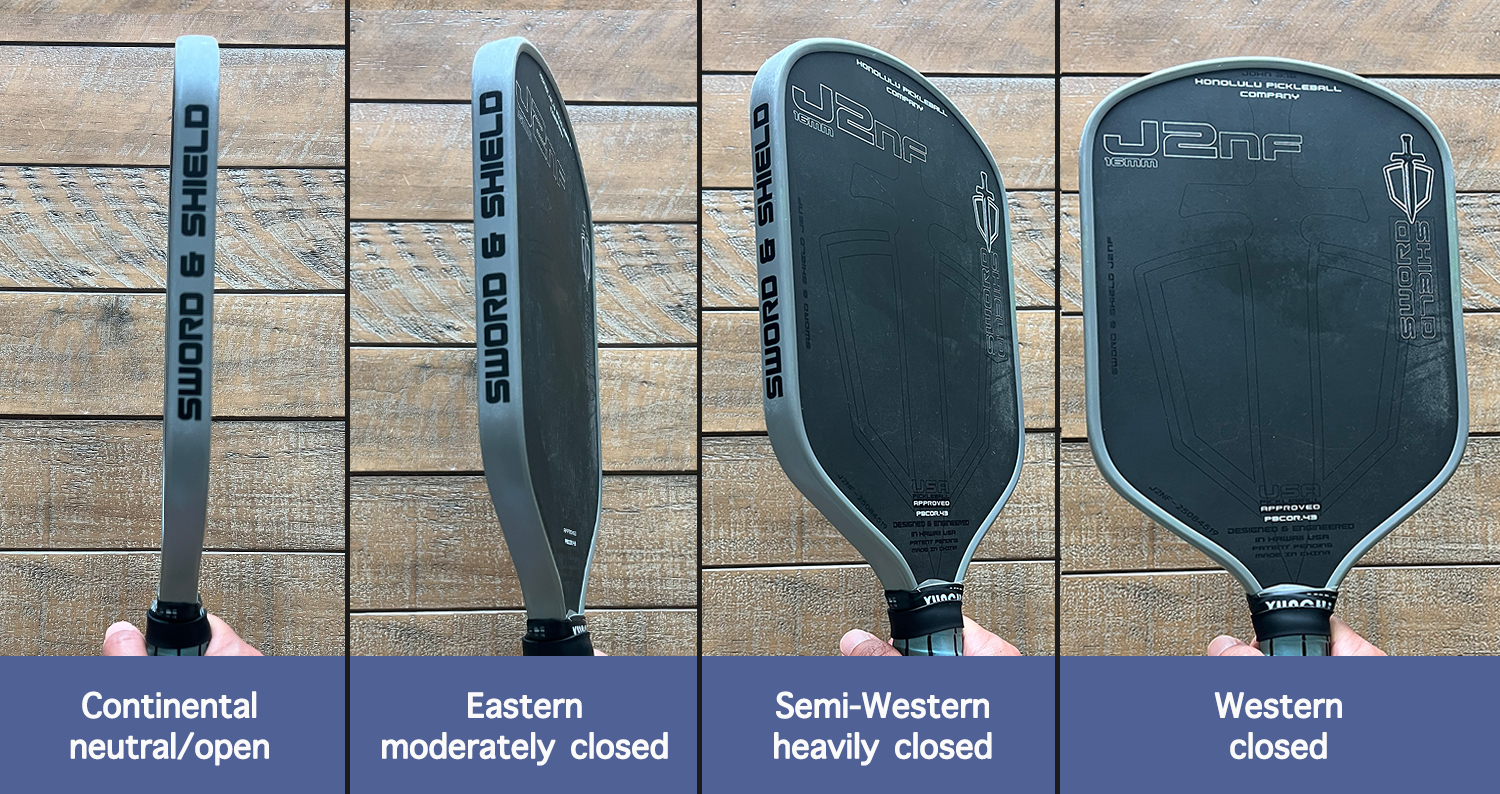
Which Pickleball Grip Should You Use?
Continental, Eastern, Semi-Western, or Western? A mechanics-based way to decide which pickleball grip type fits your game and racquet sport background.
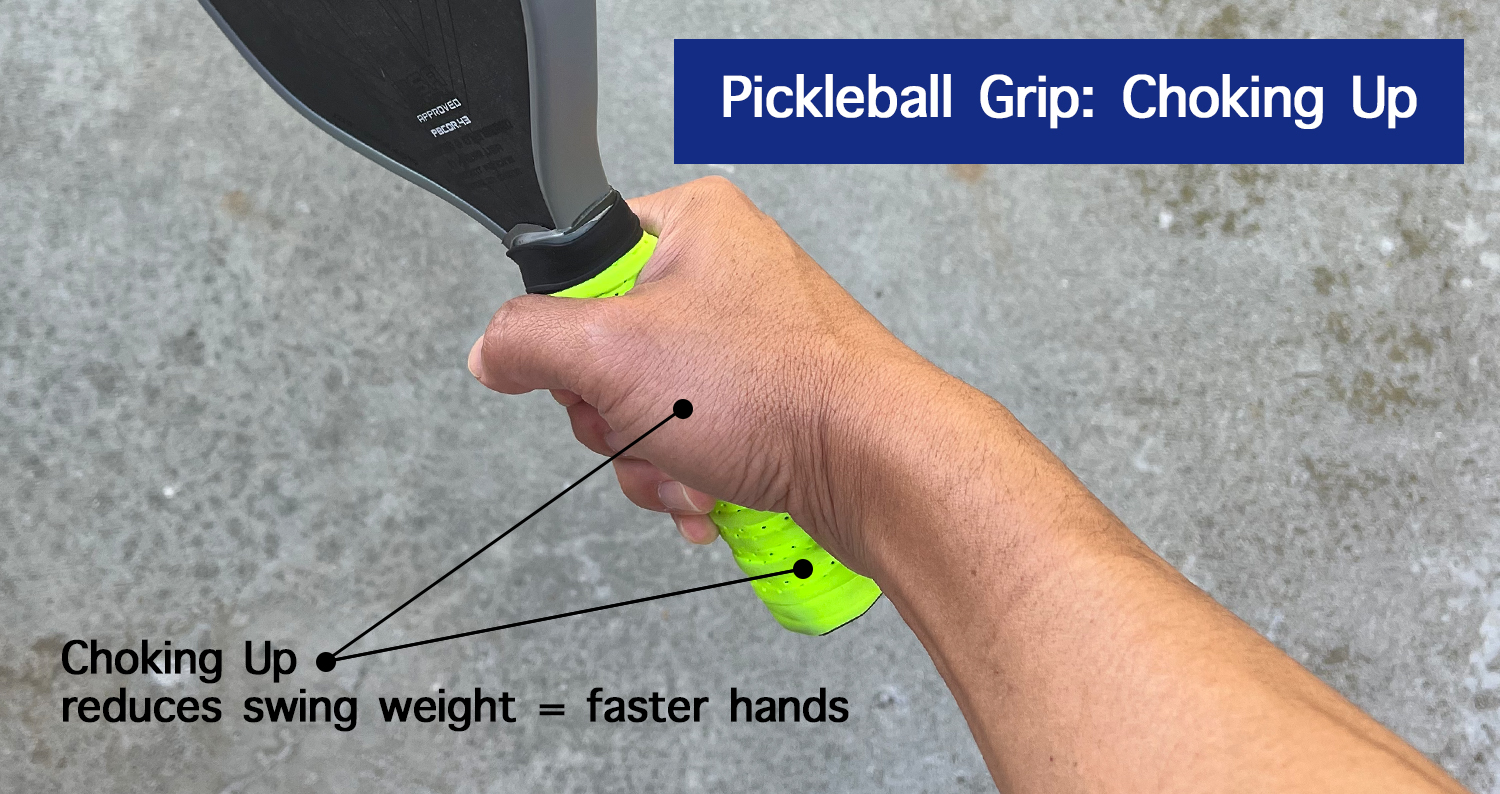
Choking Up on Your Pickleball Grip
Choking up on your pickleball grip explained — why pros hold the handle differently at the baseline versus the kitchen, and how it changes swing weight.
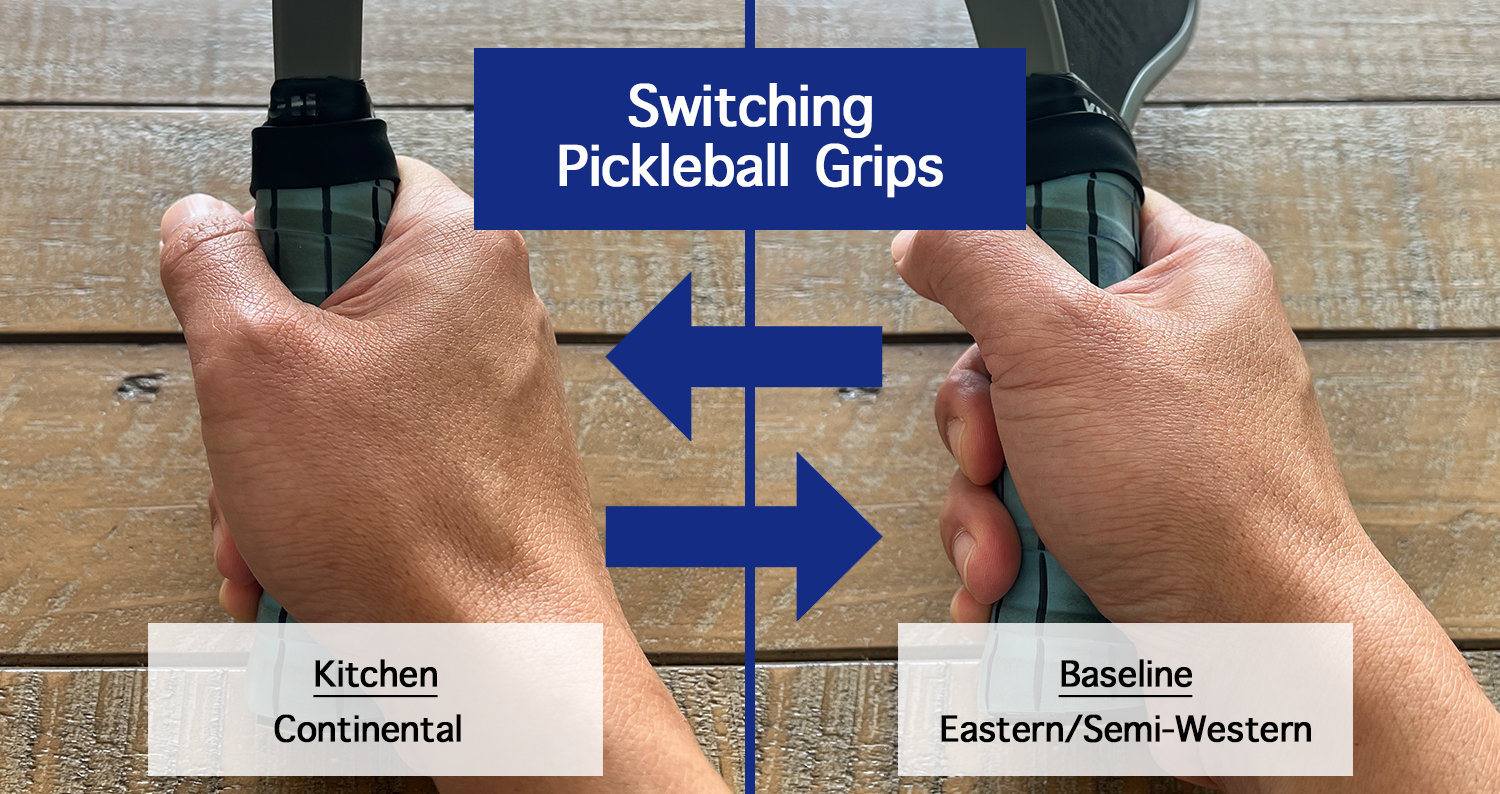
Switching Pickleball Grips
Switching pickleball grips between baseline power and kitchen neutrality, explained with the exact timing pros use to keep it fast and unnoticed.
continue reading
Related Posts
Pickleball sliding practice explained — how a controlled slide spreads deceleration force over distance instead of one hard stop, and how to train it off-court.
Wide stance deceleration in pickleball explained — why sudden stops stress the knees and ankles, and how a wider base distributes that force safely.
Pickleball lob footwork explained step by step — the pivot, drop step, and shuffle or crossover run that replaces backpedaling for any lob.