
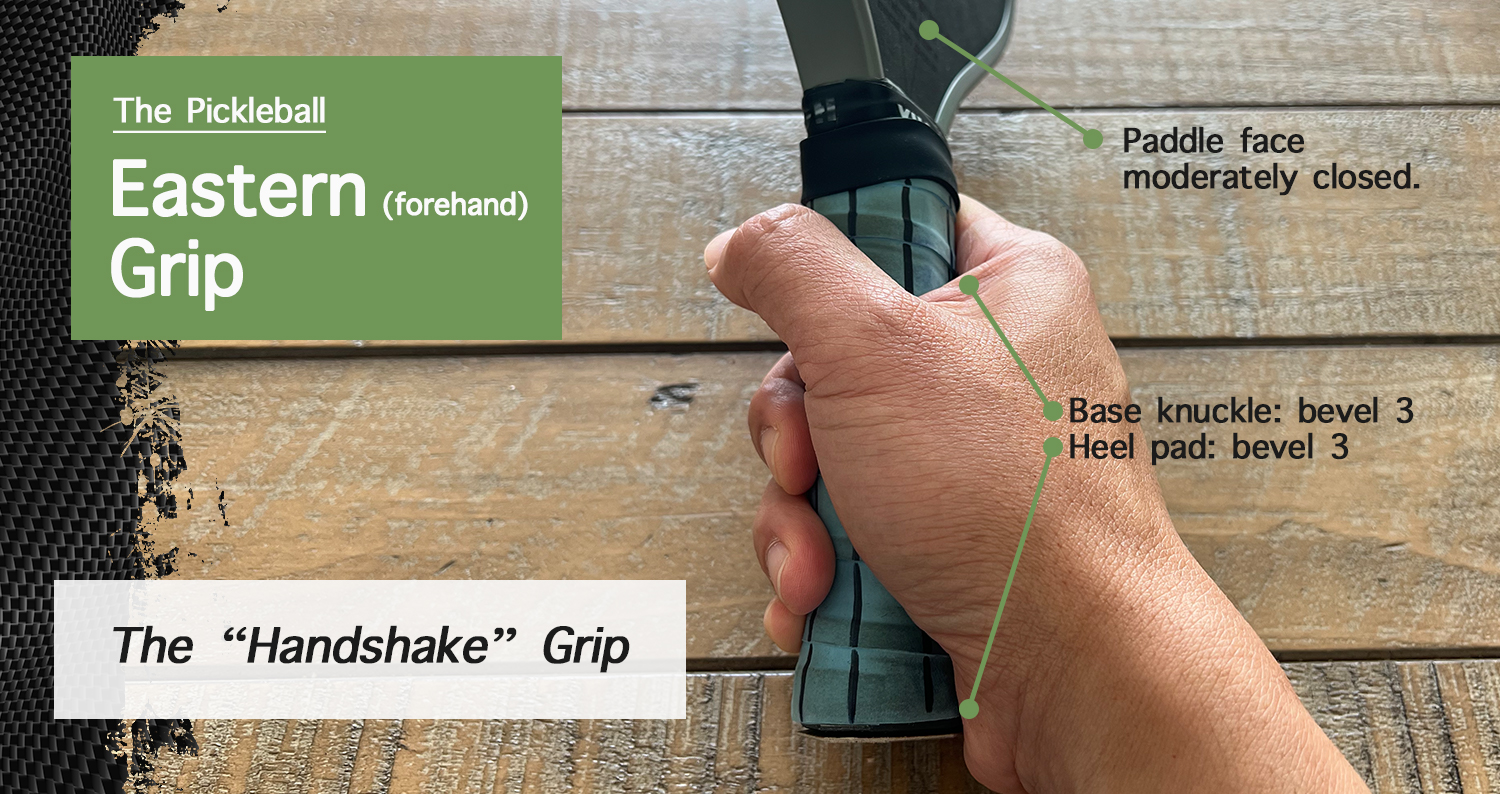
Whether you are stepping onto the pickleball court for the first time or looking to inject raw power into your baseline game, your connection to the paddle changes everything. While the Continental grip is often taught as the default “do-it-all” handle, players looking for an aggressive edge frequently turn to the Eastern grip.
Often called the “handshake grip,” the Eastern forehand configuration optimizes your paddle geometry to drive the ball hard, low, and with heavy topspin. However, that mechanical advantage comes with a distinct trade-off.
Here is everything you need to know about finding the Eastern grip, mastering its biomechanics, and navigating its strengths and weaknesses on the court.
Quick Summary
-
Hand Alignment: Your index finger knuckle and the heel of your palm rest on Bevel 3 (one bevel clockwise from Continental for right-handers).
-
Best For: High-velocity baseline drives, aggressive serves, deep returns, and generating heavy forehand topspin.
-
Weakest For: Traditional one-handed backhands and rapid, reactive volley battles at the kitchen line.
-
The Verdict: An excellent “bridge” grip for former tennis players that functions beautifully from the baseline but typically requires shifting back to Continental at the net.
How to Find the Eastern Grip: A Step-by-Step Guide
To understand grip placement, imagine your pickleball paddle handle as an octagon with eight distinct sides, or bevels. Bevel 1 is the flat surface on the very top of the handle when the paddle face is perpendicular to the ground.
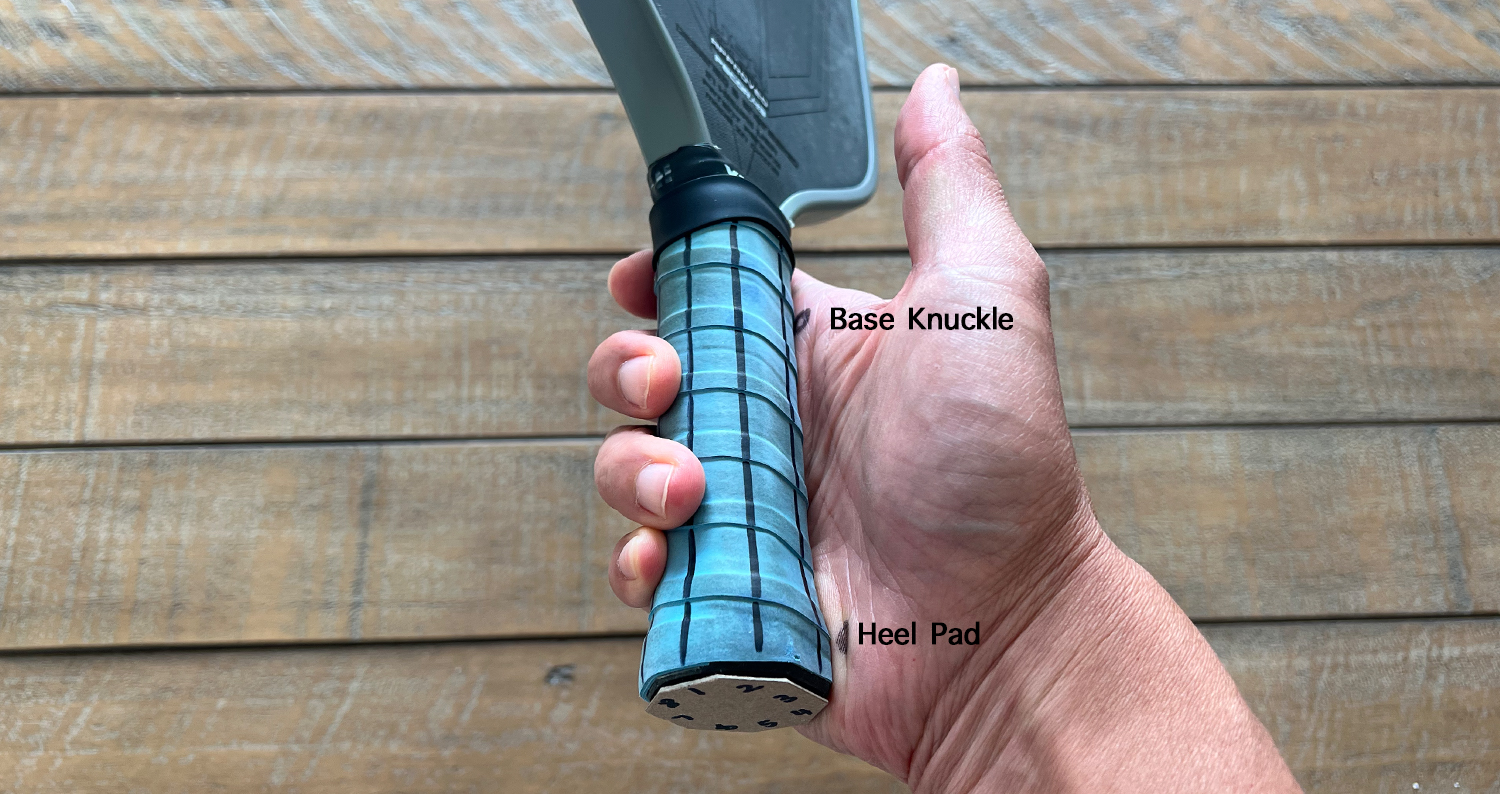
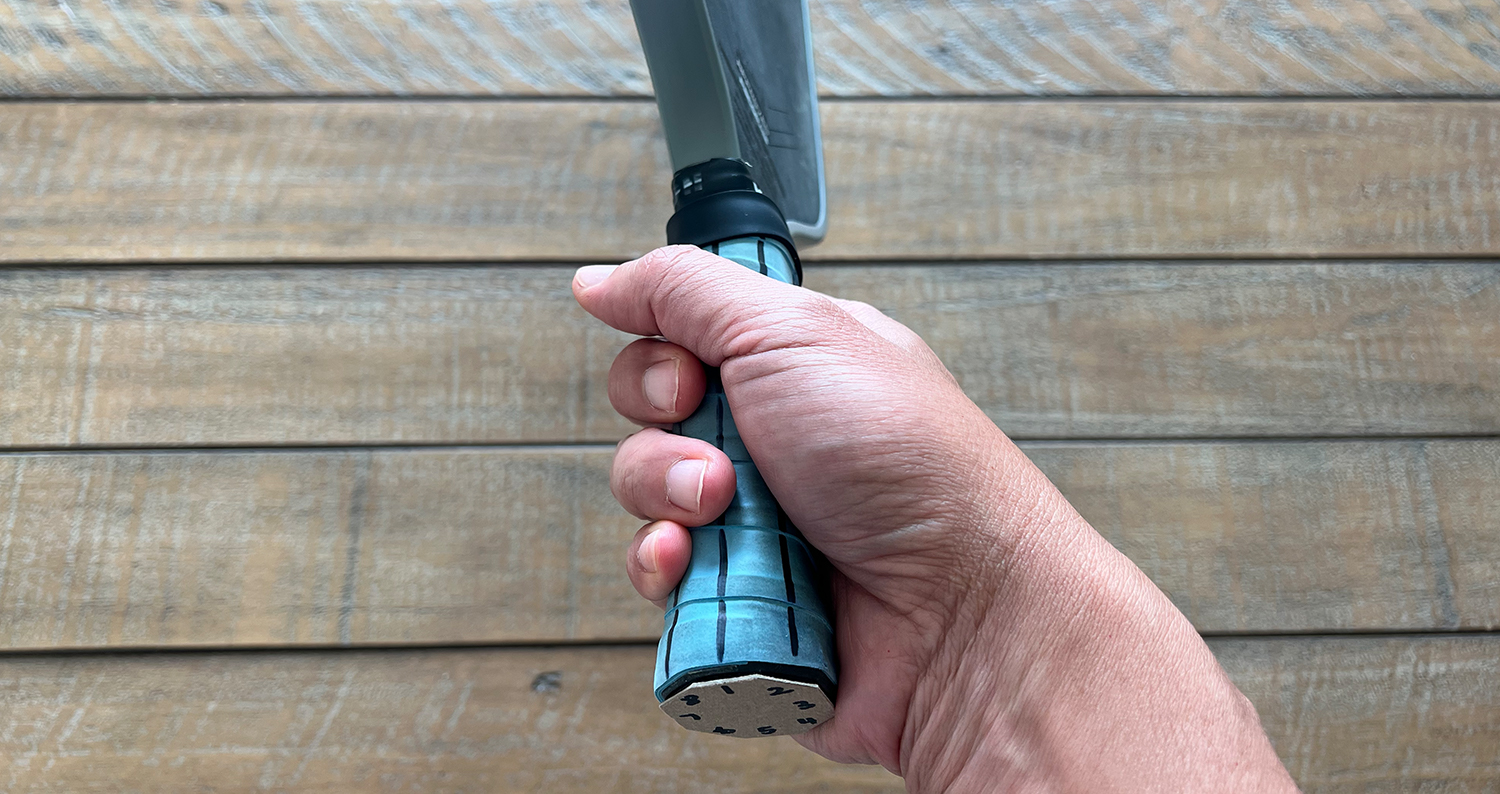
To find the Eastern grip flawlessly, use this quick checklist:
-
Start at Continental: Place the base knuckle of your index finger and the heel pad of your palm on Bevel 2 (the diagonal slant to the right of the top flat edge). This is your standard “hammer” or “chopper” grip.
-
Rotate One Bevel Clockwise: Shift your hand slightly to the right (clockwise for right-handers, counter-clockwise for left-handers) so that both your index knuckle and palm heel rest squarely on the flat vertical side, Bevel 3.
-
Verify the “V” Shape: Look down at your hand. The “V” formed by your thumb and index finger should no longer be centered on top; it will point distinctly toward your right shoulder (your forehand side).
-
Extend the Thumb: Keep your thumb resting diagonally across the back of the handle to provide underlying structural support.
The Biomechanics: Why One Bevel Shifts the Entire Point of Contact
Shifting your hand just one bevel over fundamentally alters the physics of your swing. By resting on Bevel 3, your wrist moves out of a neutral posture and into a position of slight pre-existing forearm pronation and wrist extension at address.
This minor biomechanical adjustment offers significant on-court advantages:
-
The Clean Contact Zone: High-level racquet and paddle athletes naturally make contact with the ball while the wrist is actively moving into extension. The Eastern grip pre-sets your arm closer to this ideal, strong contact point.
-
Automatic Paddle Closure: Compared to a Continental grip—which leaves the paddle face slightly open—the Eastern grip naturally closes the paddle face (tilts it slightly downward toward the court floor) during your forward swing path. This prevents hard-hit drives from sailing past the baseline.
-
Natural Topspin Generation: Because the paddle face is closed, it forces you to drop the paddle head below your wrist and swing in a distinct low-to-high arc to clear the net. This “brushing” motion is what imparts heavy topspin, causing the ball to dive sharply after clearing the net.
The Downside: The One-Handed Backhand Tax
While a closed paddle face works wonders for your forehand, it acts as an absolute liability on a one-handed backhand. If you keep an Eastern forehand grip while swinging on the backhand side, the paddle face naturally points down at the court.
To clear the net, you must forcefully over-extend your wrist or chicken-wing your elbow to manually square the face. Sports medicine data frequently associates this specific, repetitive eccentric loading of the wrist extensor tendons with lateral epicondylitis (tennis elbow).
Anatomy of the Grip: Body Positions by Importance
| Body Part | Why It Matters | What Happens If It’s Wrong |
|---|---|---|
| 1. Forearm | Sits in slight pronation, pre-loading muscles to drive through the ball cleanly. | Tensing up or trying to stay completely neutral forces an unnatural swing path. |
| 2. Wrist | Starts closer to a position of strength (extension) at the moment of ball contact. | Striking the ball with a flexed wrist causes severe eccentric loading, leading to joint strain. |
| 3. Index Knuckle | Acts as your primary physical anchor point on Bevel 3. | Allowing the hand to drift blurs your mechanics into Semi-Western or Continental without you realizing it. |
| 4. Elbow & Shoulder | Must absorb and adjust structural angles if you force a backhand shot with this grip. | Forcing a one-handed backhand without shifting grips risks acute injury and guarantees net errors. |
Common Mistakes & The Coach’s Fix
1. Silent Grip Drift (Sliding into Semi-Western)
-
The Penalty: Your backhand defense suddenly vanishes and your volleys consistently clip the net tape. Without realizing it, your hand has rotated further underneath the paddle onto Bevel 4.
-
The Fix: Take a marker or a small strip of textured grip tape and place a physical marker directly on Bevel 3. Check your alignment visually between rallies.
2. Staying in Eastern at the Non-Volley Zone (Kitchen Line)
-
The Penalty: Fast hand battles or delicate dinks become incredibly awkward. The closed paddle face makes it difficult to comfortably slide under low balls, leading to pop-ups or unforced errors into the net.
-
The Fix: Learn the off-hand transition. As you move up the transition zone toward the kitchen, use your non-dominant hand on the throat of the paddle to quickly twist the handle back into a neutral Continental grip.
3. Fighting the One-Handed Backhand
-
The Penalty: Weak, defensive slices or acute elbow pain.
-
The Fix: If you prefer hitting one-handed backhands, you must shift your hand to Bevel 1 (the Eastern Backhand grip) as the ball changes sides. Alternatively, bypass this issue entirely by adopting a modern two-handed backhand, which utilizes your non-dominant hand to control the paddle face angle.
Frequently Asked Questions
Is the Eastern or Continental grip better for pickleball?
Neither is universally better; they serve different purposes. The Continental grip is the gold standard for net play, quick volleys, dinking, and defense because it is perfectly neutral. The Eastern grip is superior for aggressive baseline play, driving the ball hard, and hitting heavy topspin forehands. Most advanced players use both, changing them depending on where they are on the court.
Should players coming from a tennis background default to the Eastern grip?
Yes, it acts as a very natural “bridge” grip for tennis players accustomed to hitting topspin groundstrokes. However, tennis transfers must intentionally practice relaxing into a Continental grip at the kitchen line, as pickleball requires far more rapid, neutral-faced net volleying than modern tennis.
Can I still use the Eastern grip if I hit a two-handed backhand?
Absolutely. The inherent backhand weakness of the Eastern grip applies solely to one-handed strokes. When you place a second hand on the handle, your non-dominant hand overrides the closed face angle, allowing you to hit clean, driving backhands without modifying your dominant hand’s position.
Next Posts
The Pickleball Split Step
The pickleball split step explained — exact timing relative to your opponent's contact, the mechanics, and why most players get the timing wrong.
Pickleball Stance: Closed, Semi-Open, and Open Explained
Pickleball stance explained — closed, semi-open, and open foot positions, when to use each, and why your stance determines your recovery speed.
Closed Stance in Pickleball
Closed stance in pickleball explained — exact foot position, why it maximizes power, and the recovery-step cost that makes it situational.
continue reading
Related Posts
Where your body should be relative to the ball for every pickleball shot type — and the specific 'banana peel' footwork mistake that causes late arrivals.
Pickleball footwork explained as one sequence — run, decelerate, set, hit, follow through — and why most shot errors actually start in the feet.
Pickleball weight transfer explained — how weight loads on the back foot and shifts forward, the heel-lift checkpoint, and why dinks need less, not more.