
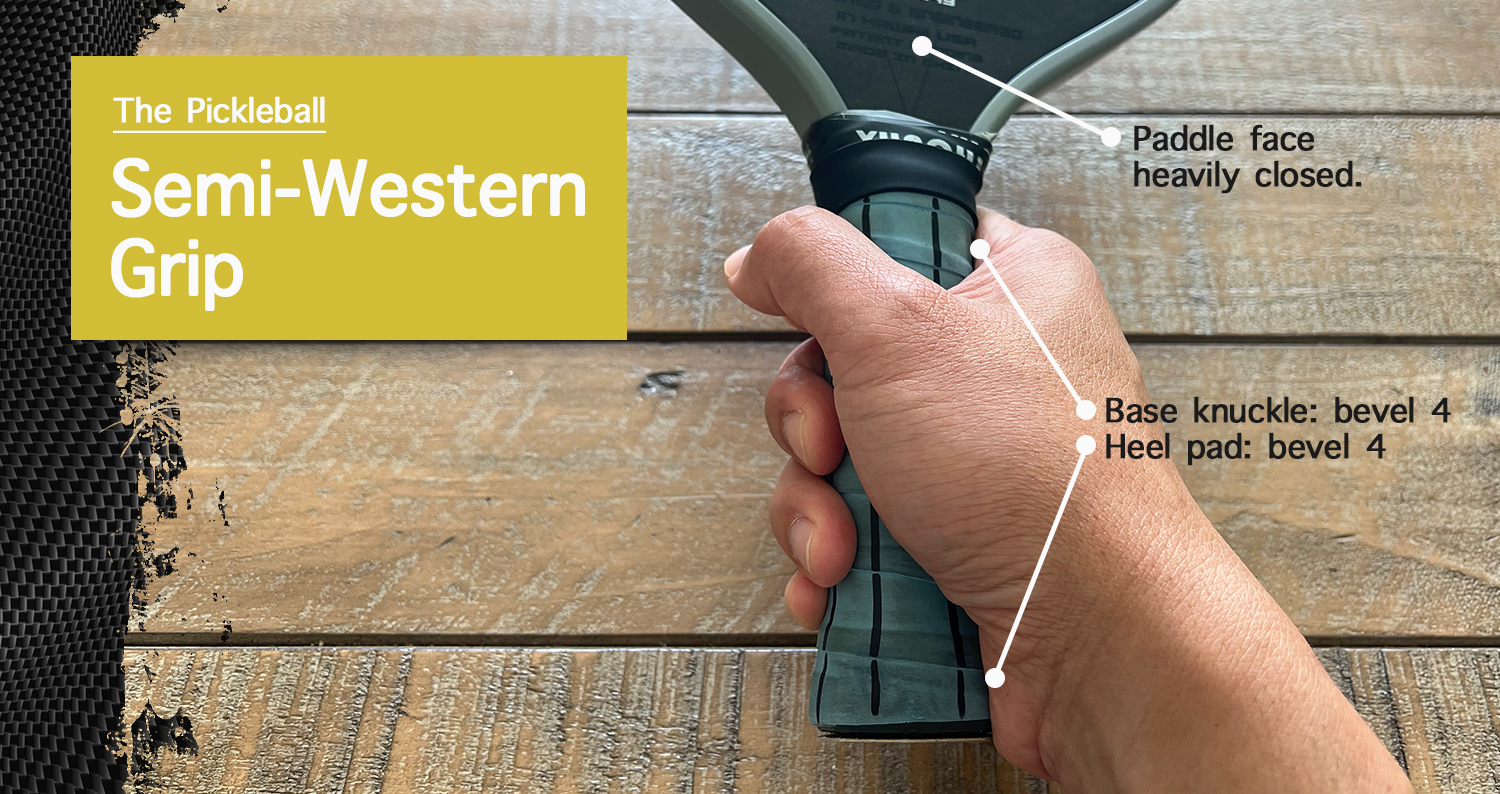
The Semi-Western grip has become an explosive weapon for modern, aggressive pickleball players. Known for its ability to inject heavy topspin into groundstrokes, it sits right between the traditional Eastern and the extreme Western positions.
While this grip unlocks incredible power and ball shape from the baseline, it exacts a strict tax on your net play and backhand mechanics. If you want to master the trade-offs of the Semi-Western grip, you need to understand its exact hand placement, biomechanics, and tactical constraints.
What Exactly Is the Semi-Western Grip?
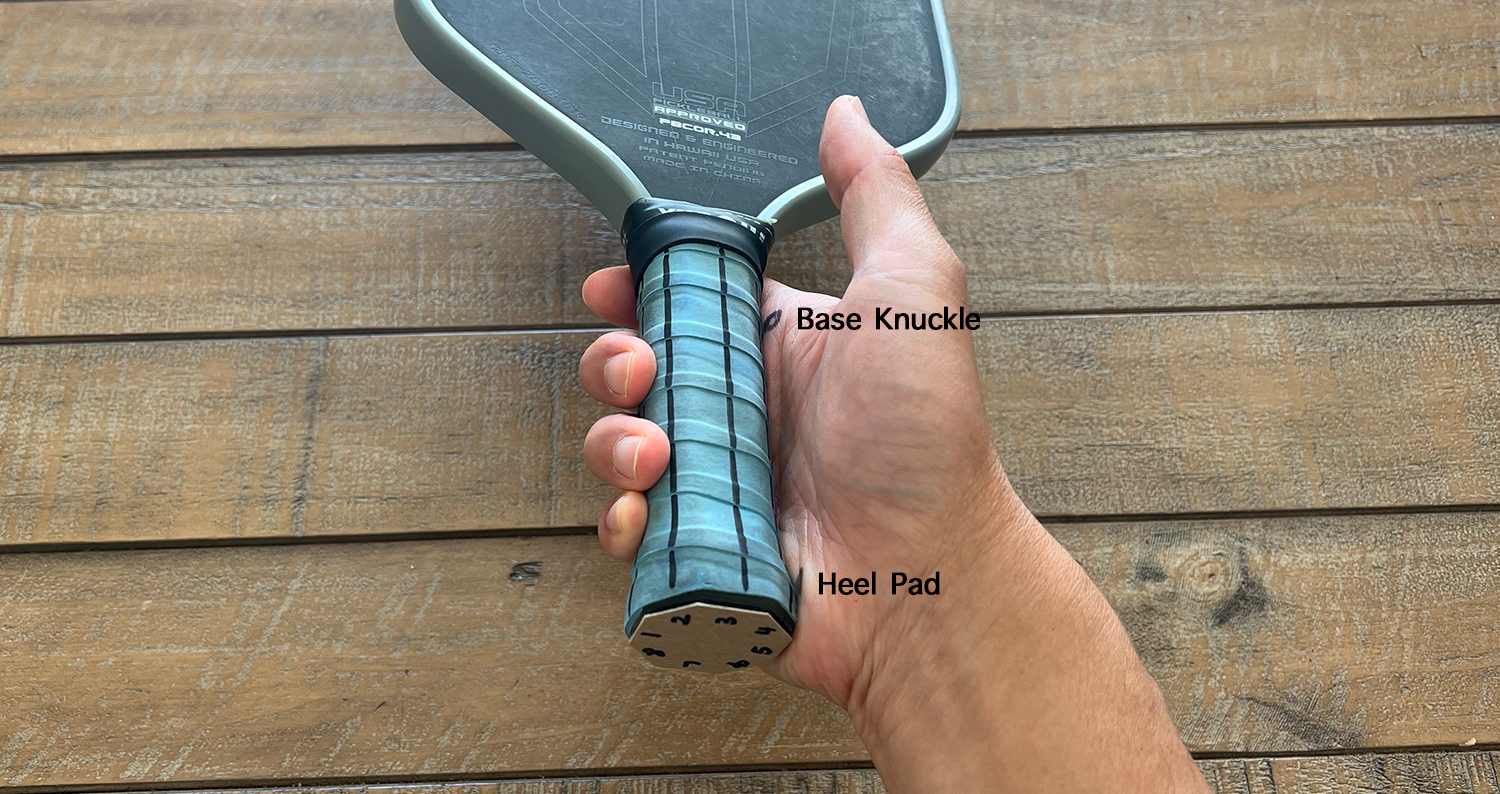
The Semi-Western grip is an aggressive, forehand-dominant orientation where your hand moves underneath the paddle handle. On a standard octagonal pickleball handle, this grip lands cleanly on Bevel 4 (for right-handers) or Bevel 6 (for left-handers).
Think of it as the next step in the clockwise, forehand-closing rotation that takes you from the neutral Continental (Bevel 2) to the classic Eastern (Bevel 3). Each bevel you rotate further trades away backhand comfort for devastating topspin.
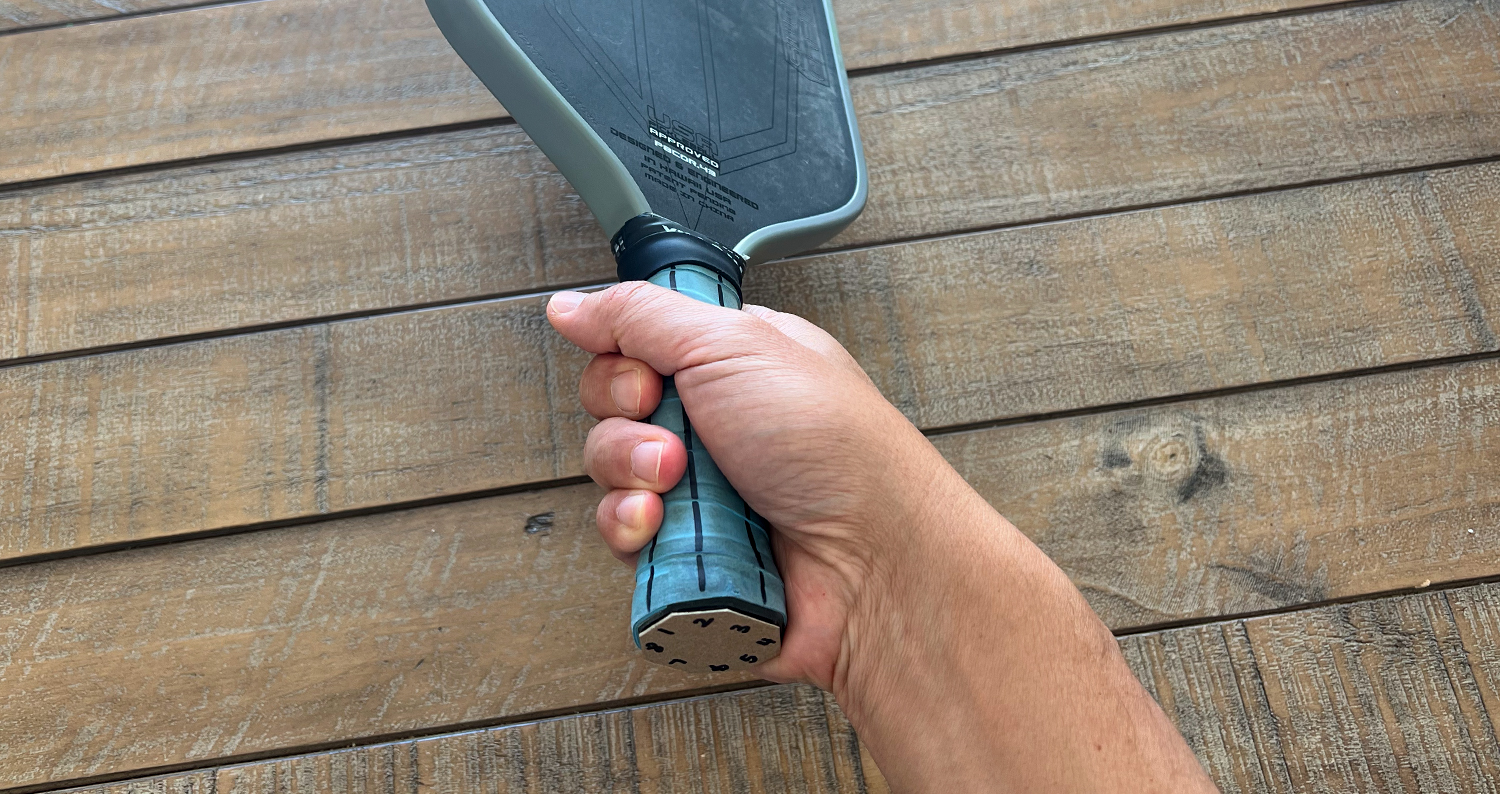
⚠️ CRUCIAL CONCEPT Because of how drastically this grip closes the paddle face, it is virtually impossible to hit a clean, stable one-handed backhand. Without an open paddle face, a one-handed backhand forces your wrist into an unnatural, weak position. Most Semi-Western players must adopt a two-handed backhand or rapidly switch grips rather than fighting the paddle angle.
Quick Summary
-
Hand Placement: Base index knuckle and palm heel rest flat on Bevel 4 (Bevel 6 for lefties).
-
Best For: Heavy topspin forehand drives, dipping third-shot drops, and aggressive baseline play.
-
The Catch: Requires a two-handed backhand or an instantaneous grip transition to hit backhands.
-
Usage: A situational or specialized grip, rarely used as a player’s sole, unchanged grip at the kitchen line.
How to Find Your Position: A Step-by-Step Guide
Finding the exact placement ensures consistency. Use this quick, step-by-step physical checklist:
-
Start at Eastern [Whole Hand]: Place your base index knuckle and palm heel comfortably on Bevel 3 (the “handshake” grip).
-
Rotate One Full Bevel [Index Knuckle]: Shift your hand clockwise one full notch until your knuckle rests flat on Bevel 4.
-
Check the Face [Visual Check]: Hold the paddle straight out in front of you at eye level. You should see noticeably more of the backside of your paddle face than you do with an Eastern grip.
-
Keep Standard Support [Thumb / Fingers]: Rest your thumb diagonally along the back panel and wrap your fingers with a relaxed, spread-out grasp. Do not choke the handle with excess tension.
Pro Tip: Alternatively, lay your pickleball paddle completely flat on the ground and pick it up naturally by the handle. Your hand will land almost perfectly in a Semi-Western position.
The Biomechanics: Forearm Pronation & Ball Height
Rotating your hand underneath the paddle increases forearm pronation at address compared to neutral grips. This position pre-loads your arm musculature closer to the exact point it needs to occupy during a heavy topspin finish.
Because forearm pronation is a primary, documented contributor to paddle-head speed, this grip naturally assists a steep, low-to-high “windshield wiper” swing path.
How Ball Height Affects the Semi-Western Grip
-
High Balls (Chest to Shoulder): This is where the grip shines. The closed paddle face allows you to strike high balls aggressively, rolling over the top of the ball to keep it inside the baseline.
-
Low Balls (Ankles to Feet): This is the grip’s greatest structural weakness. Getting under low, skidding balls requires deep knee bend and intense wrist manipulation to prevent the ball from driving straight into the net.
Body Positions by Importance
| Body Part | Why It Matters | What Happens If It’s Wrong |
|---|---|---|
| 1. Forearm | Increased pronation pre-loads the arm for heavy topspin, taking the strain off your wrist joints. | If the arm lacks proper rotation, the spin-generating workload shifts to the wrist, drastically reducing consistency. |
| 2. Wrist | Sits in an angled, ulnar-deviated resting position that dictates muscle activation at high swing speeds. | Fighting this natural resting angle during a backhand drive or a delicate dink requires active, exhausting muscle compensation. |
| 3. Index Knuckle | Acts as the defining landmark on Bevel 4 that prevents your hand from drifting into extreme styles. | Slipping further to Bevel 5 transforms it into a full Western grip, making flat shots and low-ball retrievals nearly impossible. |
| 4. Off-Hand | Acts as the structural anchor for your backhand wing, providing stability and directional control. | Trying to hit a one-handed backhand without an off-hand backup leaves a massive, exploitable hole in your defense. |
Common Mistakes & Tactical Fixes
Using an advanced grip requires advanced situational awareness. Watch out for these three common pitfalls:
1. Adopting it blindly because of a favorite pro player
-
The Penalty: You risk losing your kitchen-line versatility and soft dink control.
-
The Fix: Test the grip for 15 minutes exclusively at the kitchen line during practice. Feel how it affects your soft game before committing to it during competitive matches.
2. Having no backup plan for the backhand wing
-
The Penalty: Smart opponents will notice the closed paddle face and target your backhand relentlessly with fast, jammed body shots.
-
The Fix: If you commit to a Semi-Western forehand, you must build a reliable two-handed backhand from day one to compensate for the face angle.
3. Staying in Semi-Western during fast kitchen volleys
-
The Penalty: The naturally closed paddle face forces you to hit “broken wrist” shots, causing volleys to pop up or dump into the net.
-
The Fix: As you transition from the baseline to the Non-Volley Zone (NVZ), consciously roll your paddle hand back to a neutral Continental grip until the transition becomes automatic muscle memory.
Unexpected Perks: The Scorpion and Tomahawk
While the Semi-Western grip is primarily celebrated for baseline drives, it offers a distinct advantage when defending fast, body-bound attacks at the kitchen line:
-
The Scorpion Shot: Because your hand is already positioned underneath the handle, squatting down to counter a high ball with a “Scorpion” smash feels incredibly natural.
-
The Tomahawk overhead: High balls directed toward your non-dominant shoulder can be easily met with an overhead “Tomahawk” slap without forcing you to painfully contort your arm or shoulder.
Frequently Asked Questions
Is the Semi-Western grip good for beginners?
Generally, no. Most certified coaches recommend that beginners start with a Continental or Eastern grip. These options offer a neutral platform to master basic block volleys and flat dinks before experimenting with extreme spin.
Does the Semi-Western grip produce more topspin than an Eastern grip?
Yes. Because the paddle face is naturally angled downward toward the court surface at address, you do not need as drastic of an upward swing path or aggressive wrist flicking to generate heavy ball rotation.
Can I use the Semi-Western grip strictly for serving?
Absolutely. Many advanced players pivot into a Semi-Western grip exclusively to hit aggressive, high-arcing topspin serves that dip sharply inside the baseline, then immediately shift back into a Continental grip as they move forward.
Next Posts
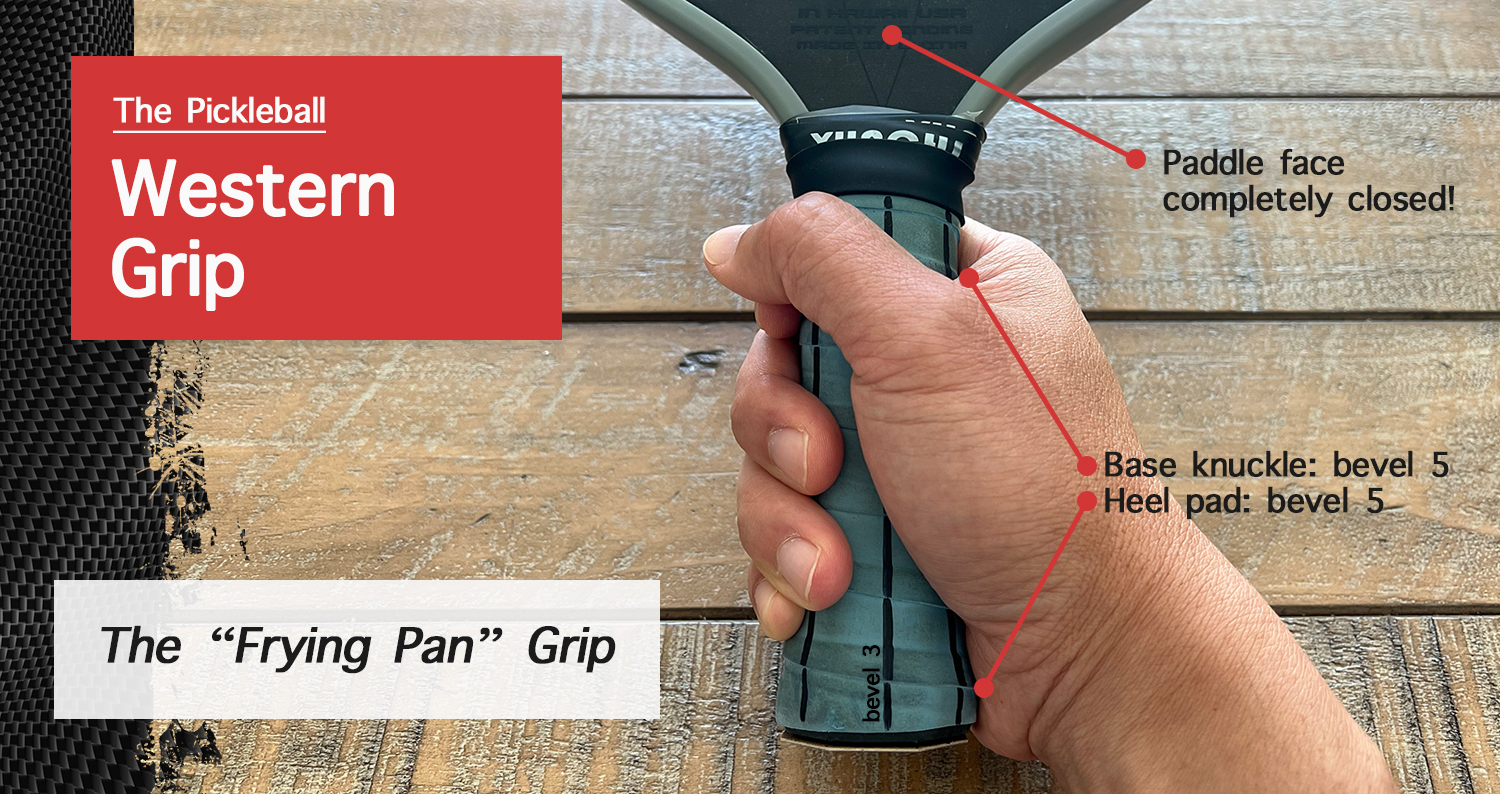
Western Grip in Pickleball
The Western grip explained in full — exact hand position, why it maximizes forehand topspin, and why it's the rarest grip at the pro level.
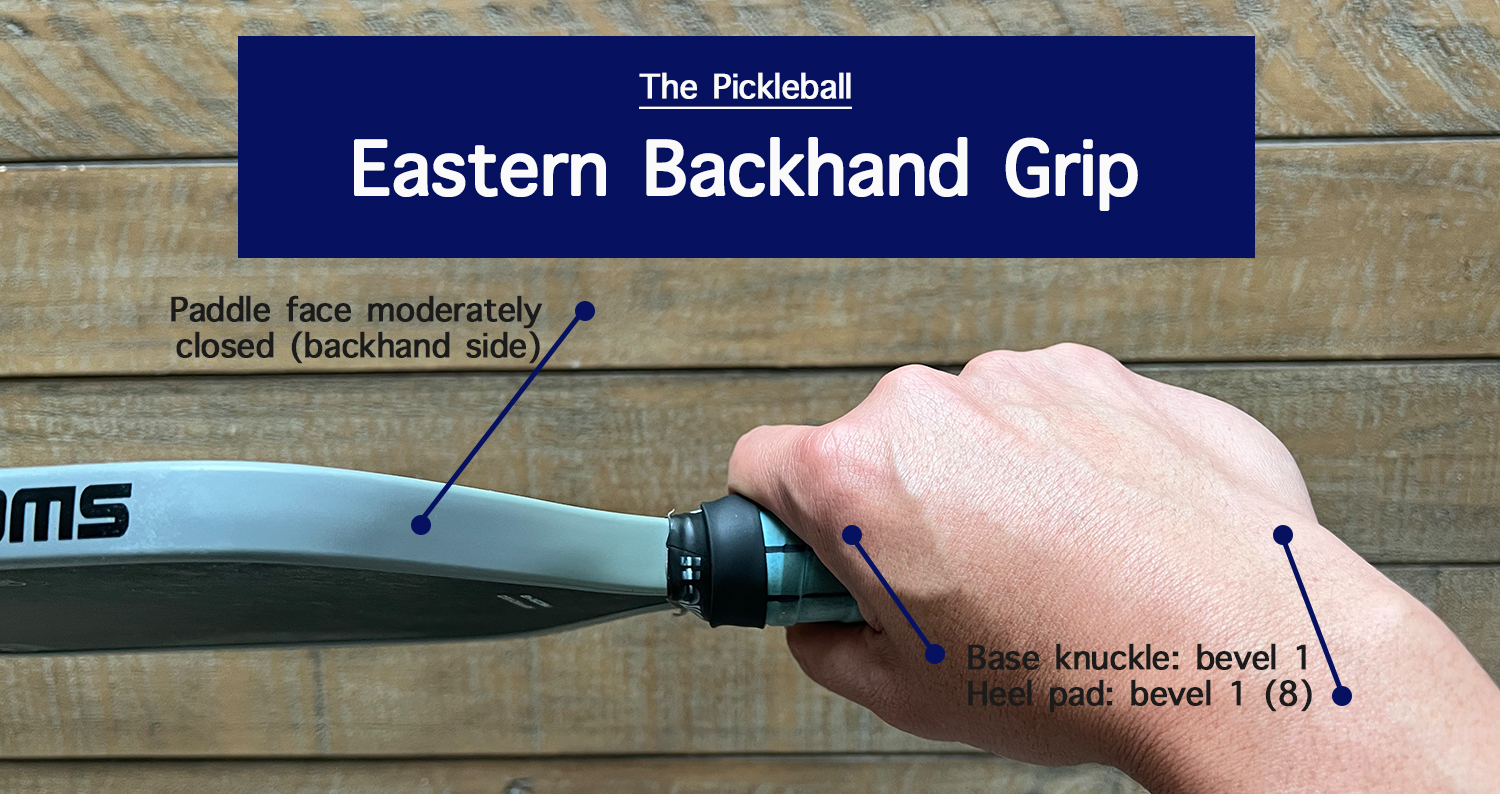
Eastern Backhand Grip in Pickleball
Master the pickleball Eastern Backhand grip. Learn the precise hand setup for one-handed drives and why two-handed players should actually avoid it.
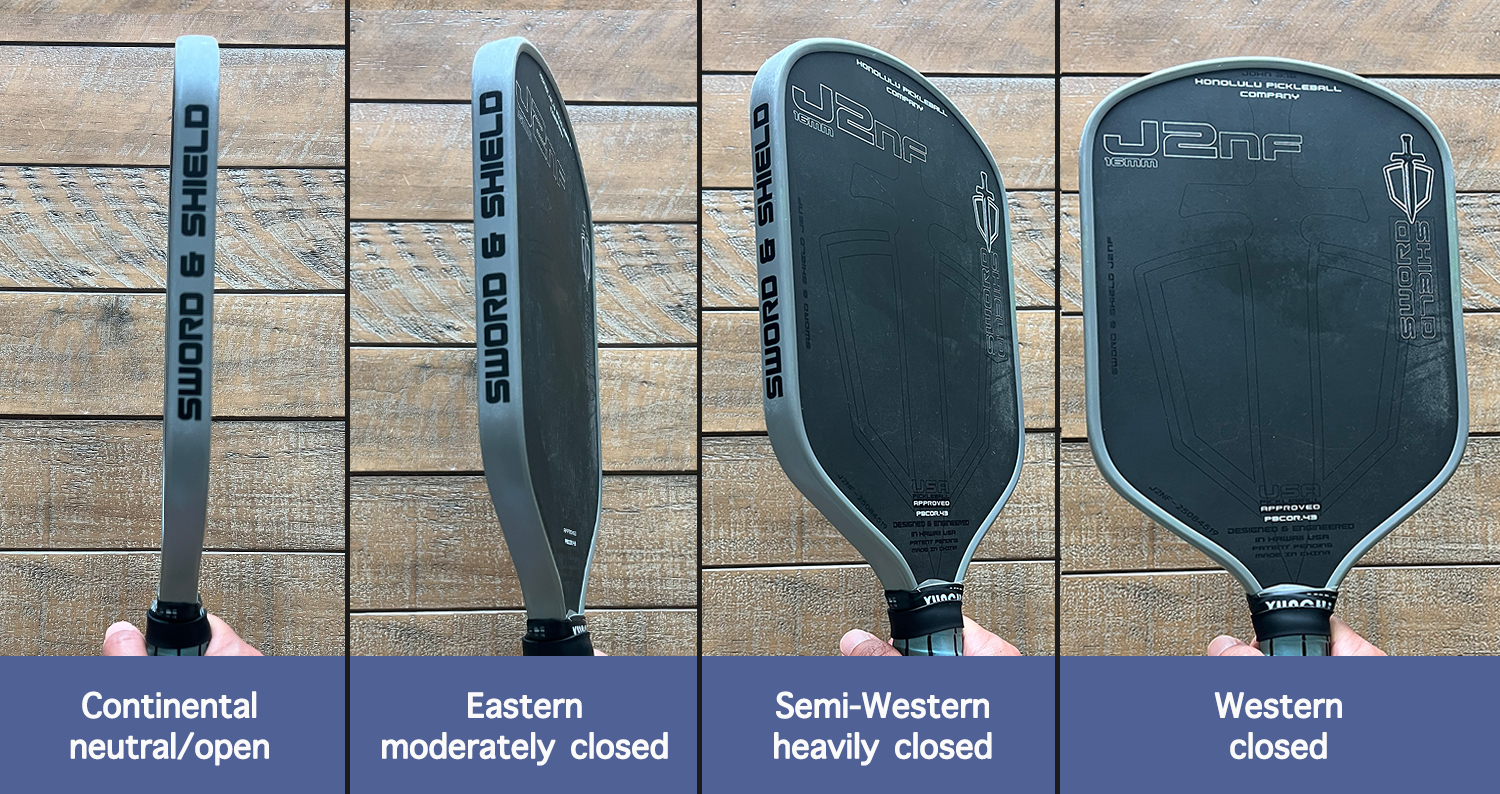
Which Pickleball Grip Should You Use?
Continental, Eastern, Semi-Western, or Western? A mechanics-based way to decide which pickleball grip type fits your game and racquet sport background.
continue reading
Related Posts
Pickleball sliding practice explained — how a controlled slide spreads deceleration force over distance instead of one hard stop, and how to train it off-court.
Wide stance deceleration in pickleball explained — why sudden stops stress the knees and ankles, and how a wider base distributes that force safely.
Pickleball lob footwork explained step by step — the pivot, drop step, and shuffle or crossover run that replaces backpedaling for any lob.