
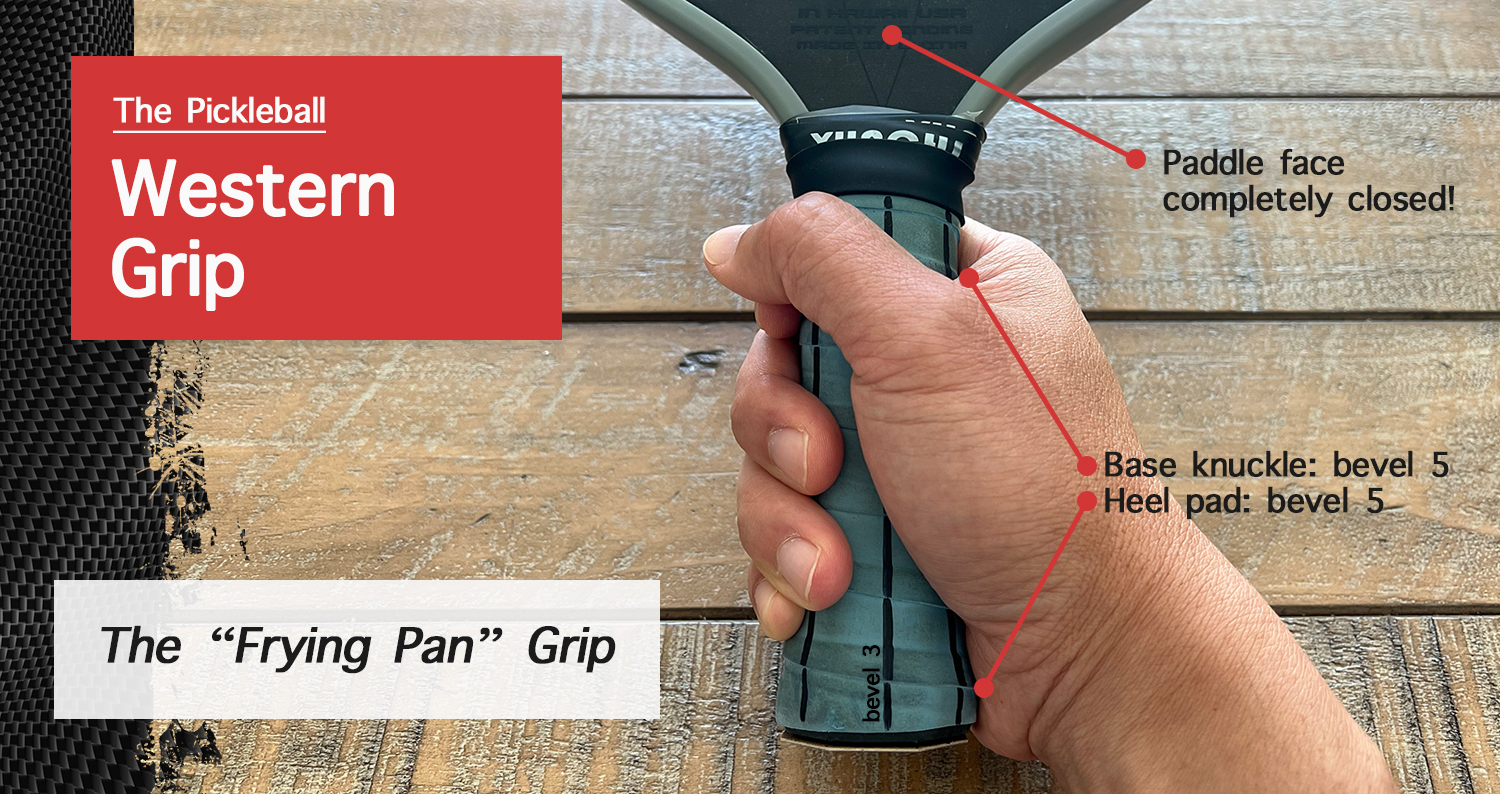
The Western grip is the most extreme, highly rotated position of the four main ways to hold a pickleball paddle. By placing your hand entirely underneath the handle, it maximizes forehand topspin but creates an immediate, severe structural disadvantage on the backhand side.
Commonly referred to as the “frying pan grip,” this setup represents the final stop on the rotational path from Continental through Eastern and Semi-Western. Every millimeter you rotate your hand clockwise buys more heavy topspin, but it comes at a steep price.
Crucial Concept
Only a small number of touring professionals—most notably Riley Newman and Jeff Warnick—utilize the Western grip as their primary setup. Elite players rarely adopt it because its severe backhand liabilities make it highly exploitable in fast-paced professional rallies.
Quick Summary
-
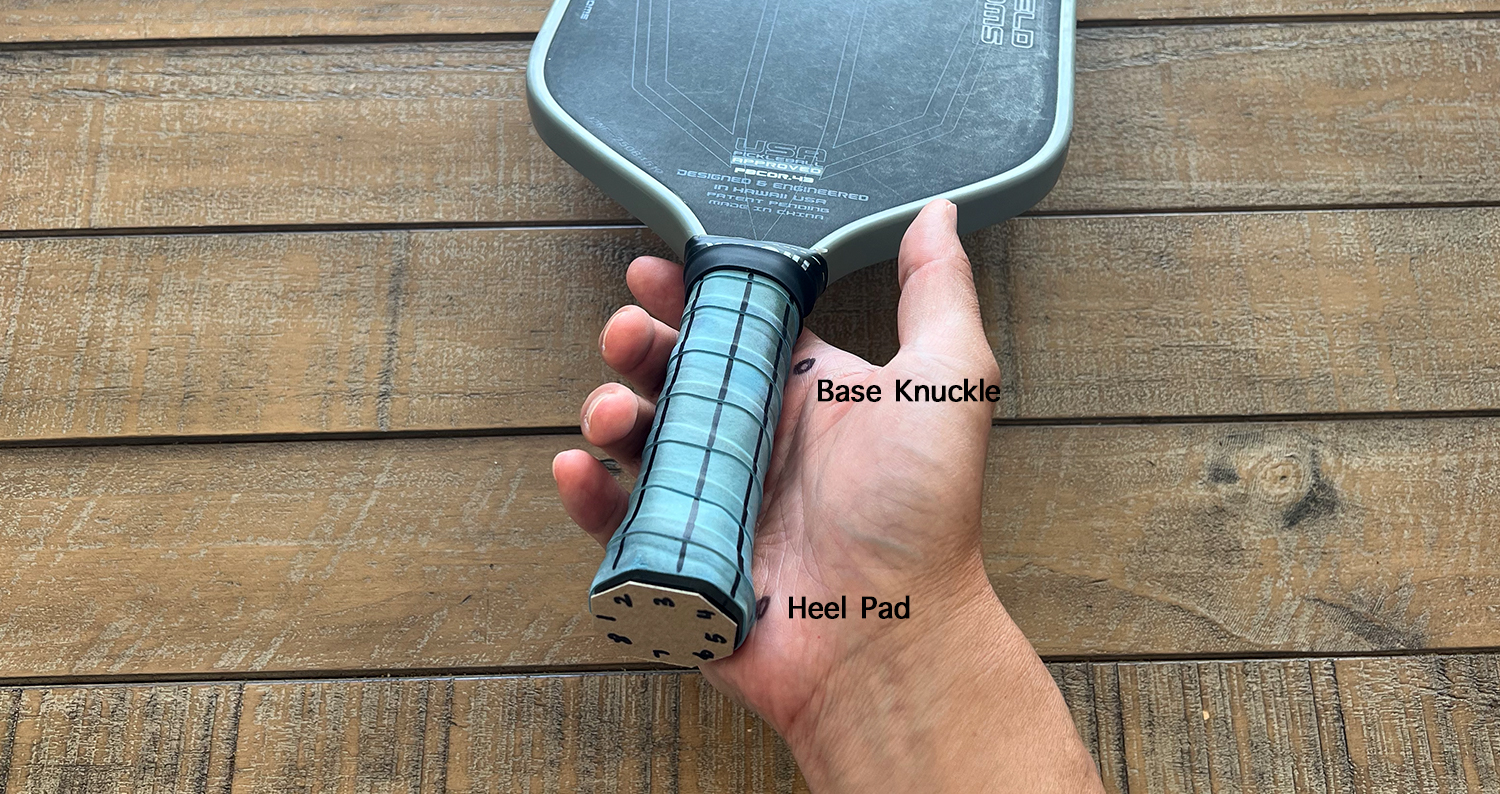
The Position: Index knuckle and palm heel rest on Bevel 5 (the exact bottom of the handle). Your palm sits completely underneath the paddle.
-
Best For: Unlocking maximum forehand topspin, heavy baseline drives, high put-away shots, and executing the “Scorpion” counter-punch.
-
Worst For: Rapid kitchen exchanges, one-handed backhands, handling low balls, and hitting defensive slices.
-
The Verdict: It is the rarest grip among high-level players due to its extreme geometric limits.
How to Find the Western Grip: A Step-by-Step Guide
To ensure you are properly aligned on the paddle’s octagonal handle, use these quick physical and visual scanning methods.
1. The Table Drop Method
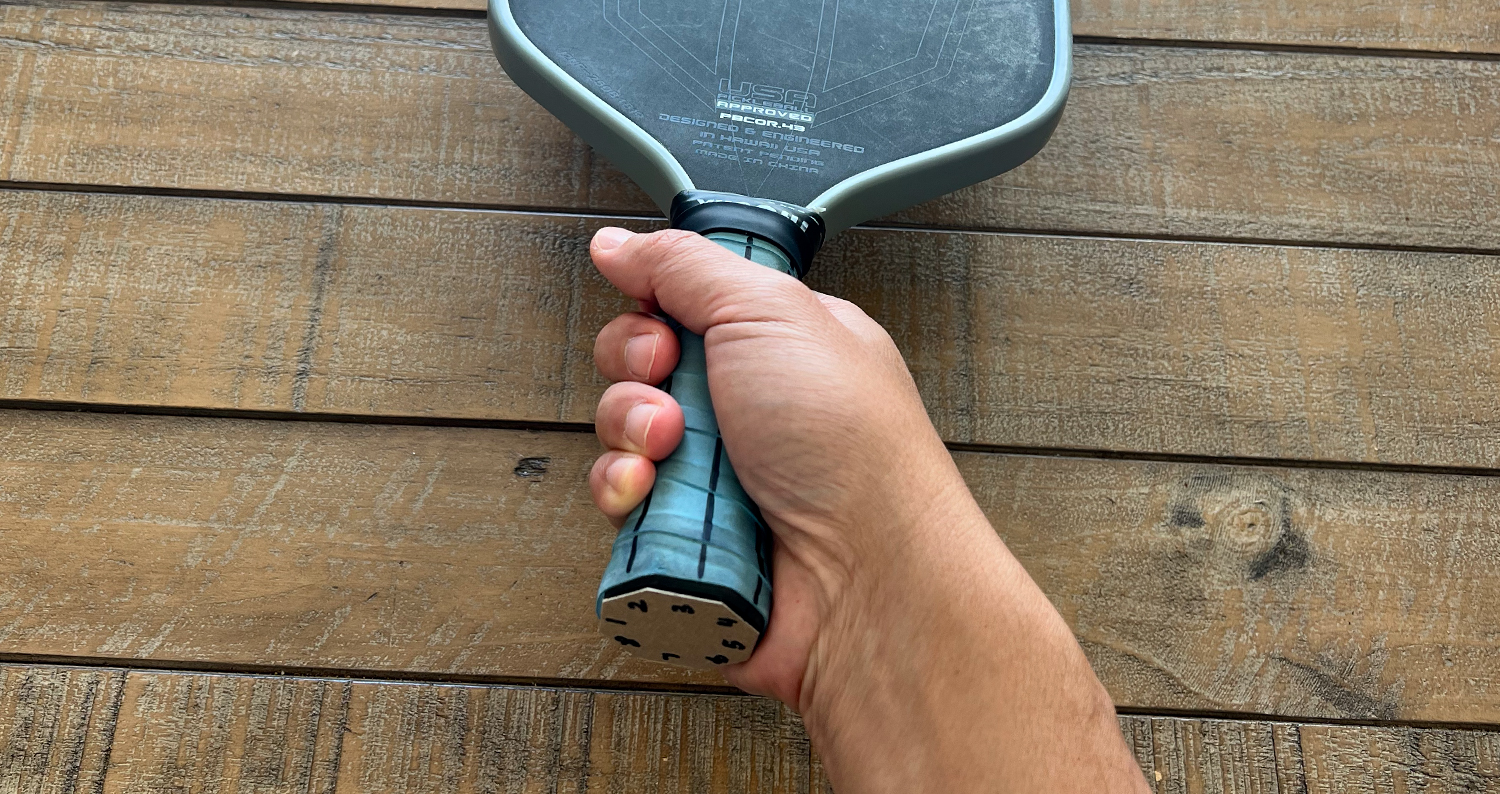
Lay your pickleball paddle completely flat on a table or the court surface, face up. Reach down and naturally grab the handle as if picking up a skillet. Without consciously twisting your wrist, your hand will naturally land on Bevel 5.
2. The Eastern Rotation Method
Start by holding your paddle in a standard Eastern “handshake” grip (index knuckle on Bevel 3). From there, rotate your hand two full bevels clockwise (for right-handers) or counter-clockwise (for left-handers) until your palm is resting flat against the underside of the handle.
3. The Visual Check
Hold the paddle straight out in front of you at eye level. If your hand is in a true Western grip, the paddle face will be severely closed—meaning you will be staring directly at the back face of the paddle rather than its edge.
The Biomechanics: Maximum Pronation, Maximum Trade-Off
The Western grip forces the forearm into its most pronated resting position of any grip style, locking the wrist into a pronounced state of ulnar deviation at address.
-
The Forehand Advantage: This mechanical structure is hyper-efficient for generating upward, low-to-high paddle paths. It naturally closes the paddle face hard through the ball, creating massive RPMs and a heavy, dipping topspin drive.
-
The Backhand Downside: That exact same pronation leaves the arm anatomically handcuffed when a ball comes to the opposite side. The wrist structurally cannot open up enough to achieve a neutral face angle for a traditional one-handed backhand. As a result, Western players are physically forced to rely on a two-handed backhand to manually override the paddle angle.
Body Positions Ranked by Importance
| Body Part | Why It Matters | What Happens If It’s Wrong |
|---|---|---|
| 1. Forearm | Achieves the highest degree of pronation, forcing an aggressive, closed-face angle ideal for brushing up the back of the ball. | Attempting a traditional one-handed backhand with a highly pronated forearm results in an unplayable, downward-facing paddle. |
| 2. Wrist | Sits in steep ulnar deviation at address, supporting the heavy low-to-high whip required for topspin. | If the wrist is held too rigid or fails to adapt, it actively fights the incoming ball trajectory, leading to dead frames or mishits. |
| 3. Palm | Serves as the primary physical anchor, resting squarely on the bottom flat bevel (Bevel 5). | Shifting the palm even slightly toward the side bevels moves your hand into a Semi-Western grip, altering your entire swing path. |
| 4. Off-Hand | Acts as the essential stabilizing force for executing a functional two-handed backhand defense. | Attempting to play a Western grip without using a supportive secondary hand leaves an easily targeted, highly vulnerable backhand wing. |
Common Mistakes & How to Fix Them
Mistake 1: Playing Western Without a Two-Handed Backup
-
The Penalty: Smart opponents will notice your grip instantly and isolate your backhand wing. Without a second hand to stabilize the paddle face, a one-handed Western backhand almost always pops the ball straight up into the air.
-
The Fix: Master a clean, two-handed backhand drive and dink before committing to a Western forehand grip.
Mistake 2: Camping in Western at the Kitchen Line
-
The Penalty: The non-volley zone requires lightning-fast, neutral deflections. Keeping your palm under the handle makes hitting soft dinks or handling low, skidding balls exceptionally difficult because the paddle face wants to stay shut.
-
The Fix: Shift to a neutral Continental grip (Bevel 2) the moment you transition away from the baseline and approach the kitchen.
Mistake 3: Over-Gripping the Paddle Handle
-
The Penalty: Because the Western grip feels physically awkward, players tend to squeeze the handle out of habit, which kills all wrist snap and destroys topspin generation.
-
The Fix: Maintain a relaxed grip pressure of 3 out of 10. Keeping your hand loose allows your wrist to drop and brush up on the ball naturally.
Frequently Asked Questions
Why is the Western grip so rare among strong pickleball players?
In tennis, high-bouncing balls on clay courts make the Western grip a highly viable option. However, pickleball involves a lower-bouncing ball, a smaller court, and rapid net volleys. The extreme angles required to dink or dig out low balls with a Western grip make it far less practical than a versatile Continental or Semi-Western grip.
Do Western players hit a “reverse forehand” on the backhand side?
Yes, some do. Because turning the arm over into a standard backhand is structurally awkward, a classic Western workaround is the “backwards forehand.” This involves keeping the hand in place and contorting the wrist to strike the ball using the forehand face of the paddle on the backhand side of the body. However, a two-handed backhand remains the preferred method.
Why is the Western grip used for the “Scorpion” shot?
The “Scorpion” is a specialized counter-attack where a player squats low at the kitchen line to surprise an opponent with an overhead flick. Because the Western grip keeps the paddle face completely flat and square when held high above your head, it allows you to easily “windshield-wiper” fast chest-high balls down into the opponent’s court without having to change your grip under pressure.
Next Posts
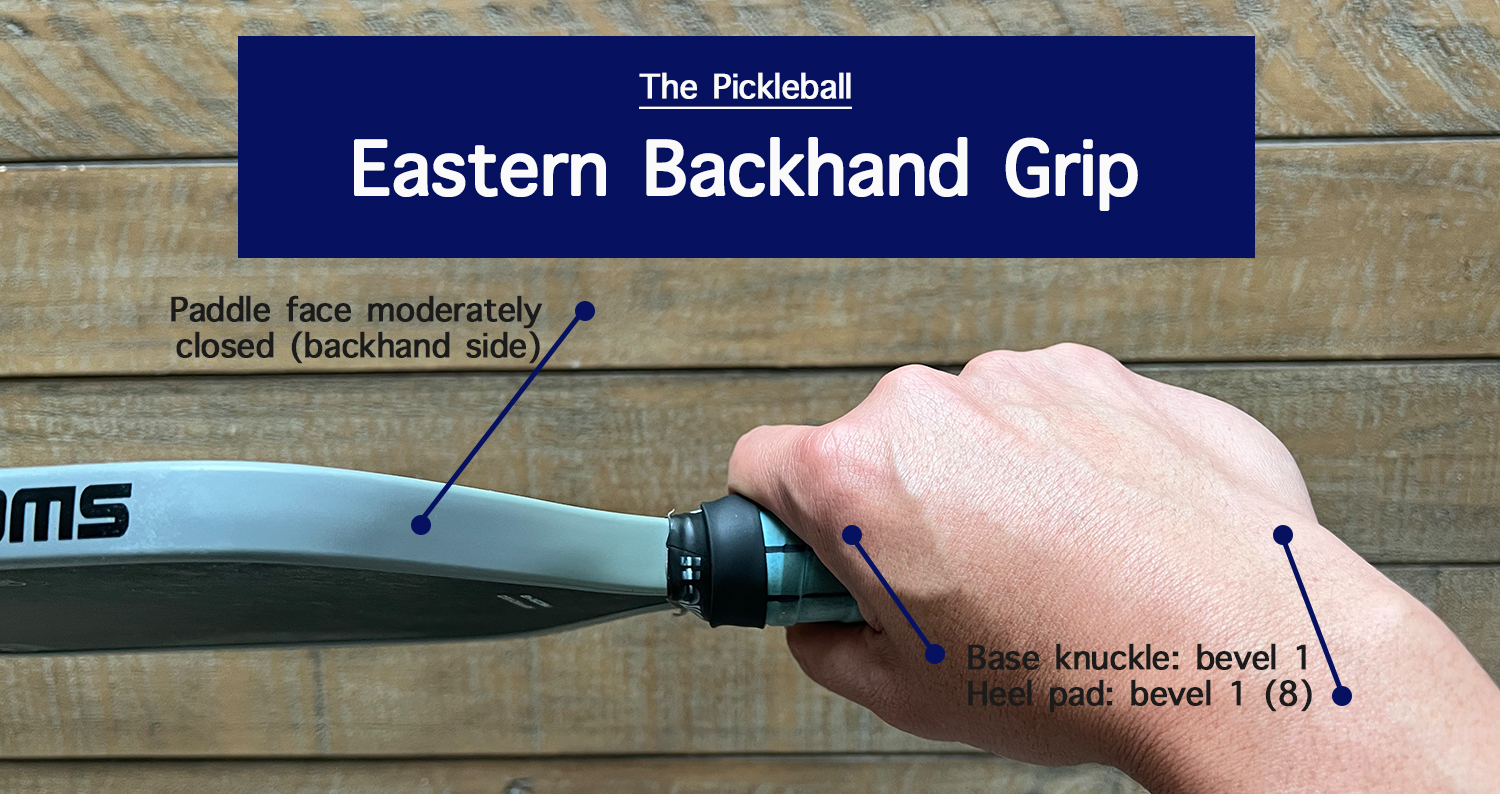
Eastern Backhand Grip in Pickleball
Master the pickleball Eastern Backhand grip. Learn the precise hand setup for one-handed drives and why two-handed players should actually avoid it.
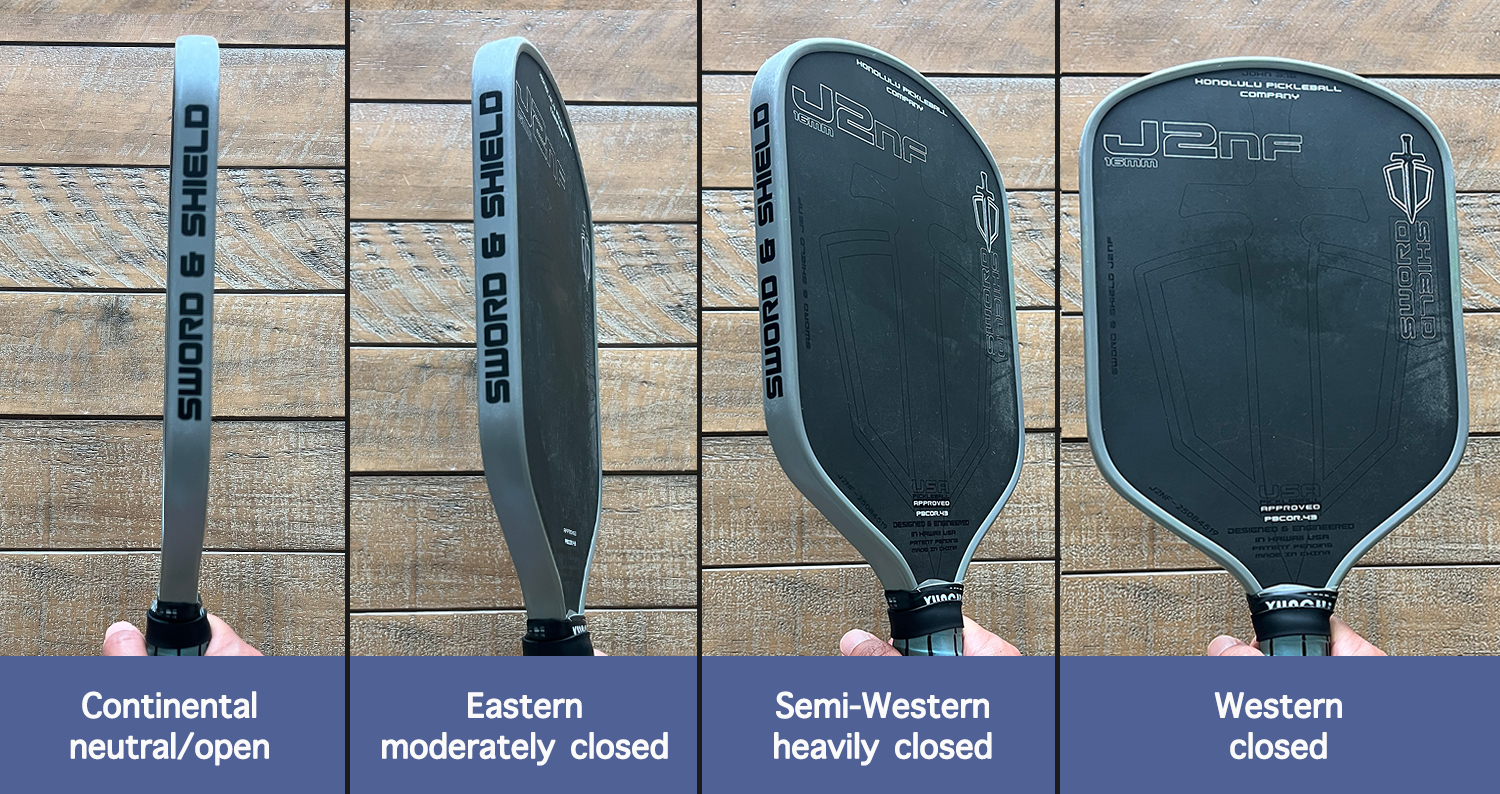
Which Pickleball Grip Should You Use?
Continental, Eastern, Semi-Western, or Western? A mechanics-based way to decide which pickleball grip type fits your game and racquet sport background.
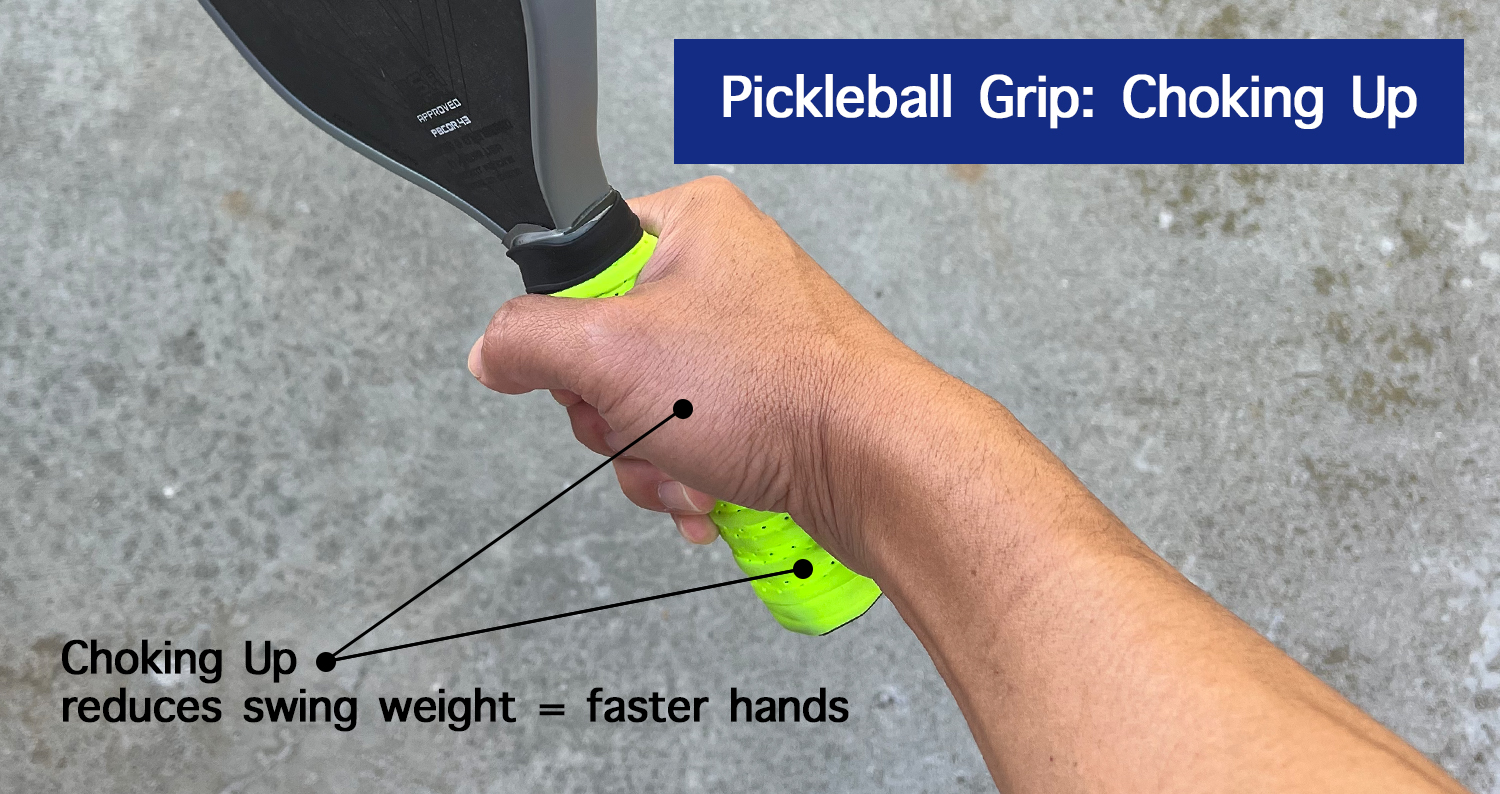
Choking Up on Your Pickleball Grip
Choking up on your pickleball grip explained — why pros hold the handle differently at the baseline versus the kitchen, and how it changes swing weight.
continue reading
Related Posts
Pickleball sliding practice explained — how a controlled slide spreads deceleration force over distance instead of one hard stop, and how to train it off-court.
Wide stance deceleration in pickleball explained — why sudden stops stress the knees and ankles, and how a wider base distributes that force safely.
Pickleball lob footwork explained step by step — the pivot, drop step, and shuffle or crossover run that replaces backpedaling for any lob.